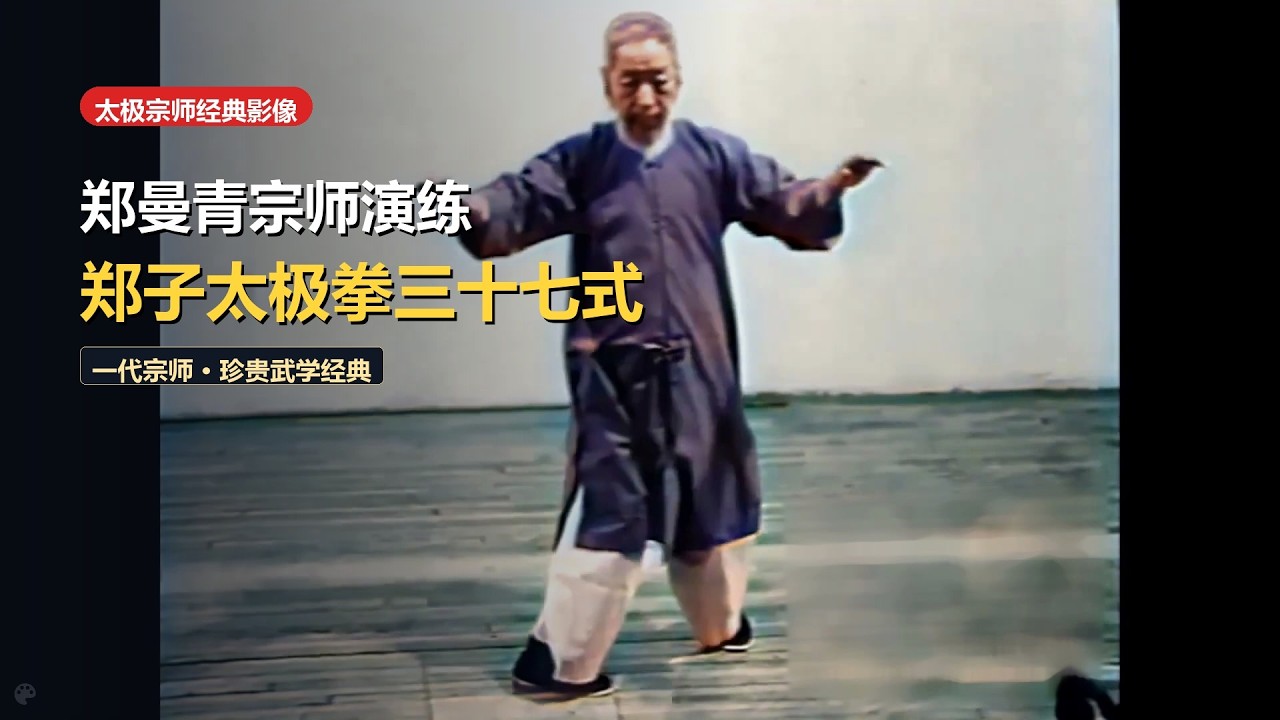
🌟 Executive Summary & Internal Martial Arts Context
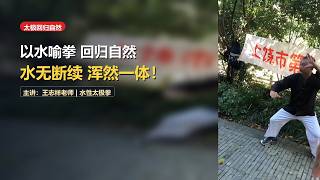
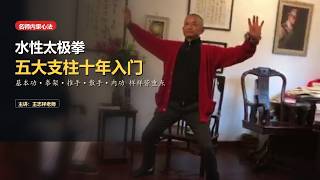
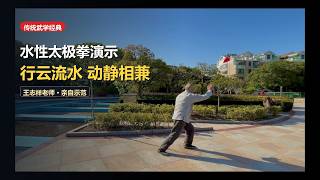
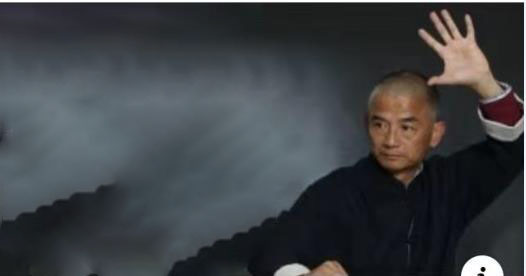
Mastering the foundational architecture of Water Tai Chi requires a radical departure from conventional athletic training. Rather than building external muscular tension, internal martial arts focus on developing skeletal alignment, fascial elasticity, and spherical kinetic pathways. In this masterclass, Master Wang Zhixiang demystifies the ancient biomechanical principles that allow a practitioner to remain effortless yet immovable.
- Biomechanical Efficiency: Transmuting muscular tension (Li) into relaxed internal power (Jin) through postural sinking and joint release.
- Fascial Elasticity: Establishing an unbroken kinematic chain from the soles of the feet through the spine to the fingertips.
- Mind-Qi Regulation: Cultivating a calm, centered state of internal awareness (Ting Jin) to regulate breath and posture simultaneously.
📜 Complete Masterclass Lecture Transcript & Commentary
The following instructional transcript documents Master Wang Zhixiang's verbal transmission during this live lesson, segmented into core progression chapters with accompanying internal martial cues:
00:01 - 02:30 Chapter 1: Direct Technical Transmission
[Opening & Grasp Sparrow's Tail] Suspend crown, sink hips, Ward-off, Rollback, Press, Push [Single Whip & Raise Hands] Opening within closing, expansive, centered, internalized intent [White Crane, Brush Knee & Play Lute] Clear empty-full, agile stepping, fluid as water [Deflect, Parry, Punch & Apparent Close] Storing and releasing, inner-outer union, sink Qi
Maintain the circular integrity of the crotch (Dang). Never allow the knees to collapse inward.
03:45 - 07:30 Chapter 2: Direct Technical Transmission
[Cross Hands & Embrace Tiger to Mountain] Hollow chest, unified body, effortless rotation [Cloud Hands, Single Whip & Downward Posture] Skiff upon water, light footwork, soft yet firm [Golden Rooster & Fair Lady Works Shuttles] Upper and lower follow, four diagonals, evasion [Bend Bow Shoot Tiger & Conclusion] Movement in stillness, returning to Wuji, timeless spirit
Breathe through the dantian rhythm; do not force air down, allow intra-abdominal pressure to soften.
🥋 4 Fundamental Principles for Daily Practice
Integrate these four physiological anchors into every repetition of this form or exercise:
Dantian Centering & Diaphragmatic Breath
Anchor the conscious mind two inches below the navel in the lower Dantian. Allow the diaphragm to descend naturally upon exhalation, expanding the abdomen spherically without forcing the breath.
Empty Kua & Spherical Crotch Mechanics
The pelvic folds (Kua) must remain soft, folded, and hollow. This creates a rounded arch in the crotch (Dang), distributing body weight into the earth like the arches of an ancient Roman bridge.
Spinal Elongation & Mingmen Expansion
Gently tuck the tailbone downward while suspending the crown (Baihui) upward. This straightens the lumbar curve, gently opening the Mingmen acupoint to awaken dormant vitality.
Continuous Liquid Flow & Non-Resistance
Every transition must resemble flowing water—unbroken, adaptable, and free of jagged stops. When met with resistance, yield without collapsing; when the obstacle recedes, follow instantly.
❓ Frequently Asked Questions by Serious Practitioners
Master Wang addresses the most common obstacles encountered when cultivating internal stillness and martial agility:
📖 Essential Internal Martial Arts Glossary (Glossario)
Key Chinese martial terminology explained through anatomical and energetic mechanisms:
| Traditional Term | English Translation | Internal Bio-Mechanical Meaning |
|---|---|---|
| Dantian (丹田) | Elixir Field | The energetic and gravitational core of the body located in the lower abdomen, serving as the reservoir of Qi. |
| Kua (胯) | Inguinal / Hip Fold | The pelvic crease and hip joints that govern stepping, weight shifting, and root connection in internal boxing. |
| Mingmen (命门) | Gate of Life | The vital acupoint located between the second and third lumbar vertebrae on the lower back, responsible for spinal buoyancy. |
| Baihui (百会) | Crown Meeting Point | The uppermost vertex of the skull, suspended from above as if held by an invisible thread to elongate the cervical spine. |
| Song (松) | Internal Release / Sung | Active, alert unwinding of muscular resistance while preserving elastic structural fullness throughout the entire fascial web. |
Water Tai Chi is an empirical science that cannot be mastered through intellectual reasoning alone. It requires regular tactile feedback, mindful repetition, and continuous release of habitual physical holding patterns.
Subscribe to our official YouTube channel and share these teachings with fellow martial artists seeking authentic Neijia transmission.