Master Wang Zhixiang
Founder of the International Wang Academy, Inheritor of Water Tai Chi, and Scholar of Traditional Chinese Medicine.
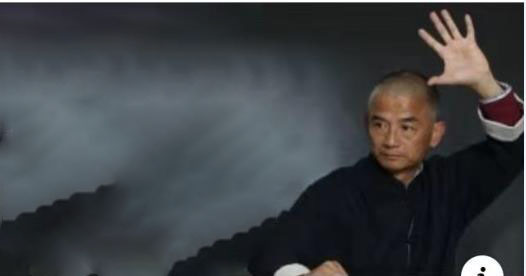
Master Wang Zhixiang
• TCM Scholar & Physician: Graduated from Shanghai University of Traditional Chinese Medicine in 1992, majoring in Acupuncture and Tuina (manual therapy for musculoskeletal alignment and internal balance).
• Internal Martial Arts Heritage: Commenced training at age 14 across the Internal Kung Fu Triad (Taijiquan, Xingyiquan, Baguazhang). Inherited the authentic Yang Style lineage from Master Dong Bin and the Water Tai Chi system from Grandmaster Wang Zhuanghong.
• International Dissemination: Founder of the International Wang Academy (IWA) with headquarters in Lugano, Switzerland. Actively teaching across Switzerland, Italy, France, Germany, England, Holland, and Denmark since 1999.
Authentic Lineage & Heritage Architecture
The internal martial arts taught by Master Wang Zhixiang represent the convergence of three venerable traditional lineages, directly rooted in Grandmaster Yang Lu-chan and enriched by the 20th century's foremost internal masters across the Yang, Wu, and Water Tai Chi traditions.
Official three-stream transmission diagram as recorded in the International Wang Academy archive, illustrating the convergence from Grandmaster Yang Lu-chan.
Yang Style Tuishou (Dong Bin)
Grandmaster Dong Yingjie was Yang Chengfu's principal disciple and co-author of The Essence and Applications of Taijiquan. Dong Bin inherited this profound combat wisdom from Dong Shizuo (Dong Yingjie's son) and Yue Huanzhi (noted for empty-force issuing). Master Dong Bin passed down the hallmark qualities of supreme relaxation (Song), immediate neutralization, and effortless responsiveness to Master Wang.
Water Tai Chi (Wang Zhuanghong)
Grandmaster Wang Zhuanghong combined profound instruction from Chu Kuai-ting (a disciple of Li Cunyi and Yang Chengfu) and Wang Zhuangfei (Yin-style Baguazhang). During a decade of intensive research, he synthesized the classical text "Taijiquan is like a great river rolling on without pause" into Water Tai Chi, transforming planar martial forms into dynamic, three-dimensional spiral wave motions.
Wu Style Precision (Ma Yueliang)
Wu Style Taijiquan is celebrated for its compact elegance, subtle circular arcs, and exquisite neutralizing sensitivity. Through senior disciple Wang Haoda, Master Wang studied the authentic heritage of Grandmaster Ma Yueliang (President of the Shanghai Jianquan Association). This discipline instilled the refined ability to adhere, follow, neutralize, and issue force without the slightest trace of mechanical resistance.
The Evolution of Water Tai Chi: Grandmaster Wang Zhuanghong
Grandmaster Wang Zhuanghong was a rare intellectual and martial titan of 20th-century Shanghai. A renowned scholar of Chinese epigraphy and calligraphy at Duoyunxuan, his martial evolution traversed three distinct phases:
- Foundation Building: Initiated into Tai Chi in his youth by Grandmaster Dong Yingjie, he subsequently devoted two rigorous years under Grandmaster Zhu Guiting, enduring dawn practice in freezing winters to master Yang Style Tai Chi Chuan and Xingyiquan's piercing internal kinetic structures.
- Mastery of Baguazhang Dynamics: In the mid-1960s, he apprenticed under Grandmaster Wang Zhuangfei (primary disciple of Yin Style Baguazhang master Gong Baotian). Through relentless discipline—running up to 64 complete circle-walking routines daily—he embedded circular stepping, multidirectional torque, and evasive body mechanics into his physical foundation.
- Decade of Solitary Contemplation & System Creation: Immersing himself in Wang Zongyue's classic maxim—"Like a long river, surging forward without cessation"—he spent a decade re-engineering traditional Yang Style. He replaced two-dimensional linear trajectories with three-dimensional fluid waves, incorporated inward spiral pathways into Lu (Rollback), and unified push hands with fluid dynamics. First established in Hong Kong in 1994, the system was formally designated Wang's Water Tai Chi Chuan in 2006.
Medical Science, Fascial Anatomy & Calligraphy
What sets Master Wang Zhixiang's pedagogy apart is the complete integration of traditional Chinese culture with modern anatomical understanding:
TCM & Fascial Myomechanics
With a formal medical degree in Acupuncture and Tuina, Master Wang demystifies internal energy. He articulates internal power (Jin) through kinetic fascial chains, spinal decompression, pelvic opening (Emptying the Kua), and micro-circulatory vasodilation, replacing mysticism with precise physiological biomechanics.
Calligraphic Ideograms & Kinetic Intent
As an accomplished Chinese calligrapher, Master Wang observes that writing brushstrokes and moving in Tai Chi share identical metaphysical laws: "The brush does not strike; it flows, lifts, depresses, and coils." Mental intent (Yi) guides the breath, and the breath animates the body like flowing ink on rice paper.
The IWA Teaching System: 5 Pillars & 8 Core Principles
At the International Wang Academy, students advance through a comprehensive, structured syllabus consisting of Five Main Pillars and Eight Core Principles:
The Five Main Pillars
- Study of Style Fundamentals: Internal geometric alignment including Three Circles (Round Crotch, Round Dantian, Round Mingmen), One Emptiness (Empty Kua), and One Suspension (Crown Suspension).
- Study of the Traditional Form: Solo execution of the full Yang Style Water Tai Chi set, emphasizing fluid continuity and uncoiling transitions.
- Tuishu (Push Hands): Single and double-handed drills, static and moving stepping, developing listening sensitivity (Ting Jin) and instant neutralization (Hua Jin).
- San Shou (Free Application & Sparring): Effortless issuing of internal power from zero distance without tension or mechanical force.
- Nei Gong (Internal Vitality & Health): Cultivation of deep marrow respiration, tendon elasticity, organ vitality, and meditative stillness.
The Eight Core Principles
1. Gravity Toward Center of Heart
Rooting body mass into the earth while maintaining an upward suspended crown, centering all forces inward.
2. 13 Forces Movement Continuous
Seamless integration of the 8 kinetic gates (Peng, Lu, Ji, An, Cai, Lie, Zhou, Kao) and 5 directional steps.
3. Root, Trunk, Branch
Ground reaction from the feet (root), governed by the waist-spine (trunk), manifested through the hands (branches).
4. Point, Line, Surface, Volume
Evolving geometric motion from focal points into linear arcs, curving planes, and three-dimensional spheres.
5. Intention Leads Qi, Qi Moves Body
Conscious mental intent (Yi) mobilizes internal energy; the physical frame follows without muscular rigidity.
6. 45° Vector Angles
The golden biomechanical angle for redirecting incoming momentum, deflecting force, and positioning footwork.
7. Water Run, Wave, Whirlpool
Three stages of dynamic fluidity: steady river flow, surging cresting waves, and engulfing vortex spirals.
8. External Move, Center Follows
Outer extremities initiate fluidity while the central axis harmonizes, maintaining undisturbed dynamic equilibrium.
International Documentaries & Academic Assemblies
Master Wang Zhixiang's cultural work has been recognized by national European broadcasters and university faculties:
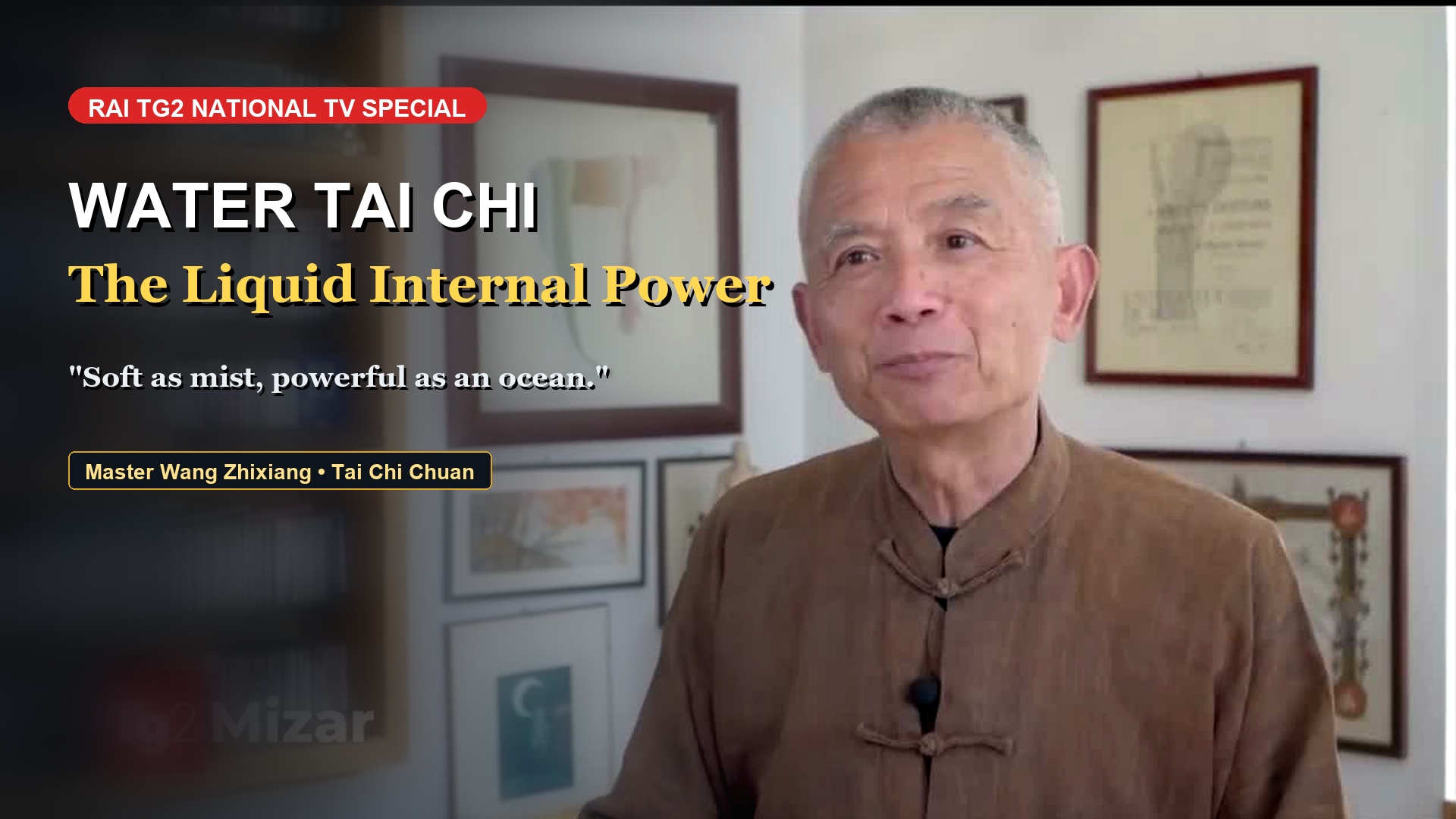
Italian National TV Feature (RAI TG2 Mizar)
Official RAI TG2 documentary highlighting the effortless softness, fluid mechanics, and scientific principles of Water Tai Chi Chuan.
Watch Documentary & Read Analysis →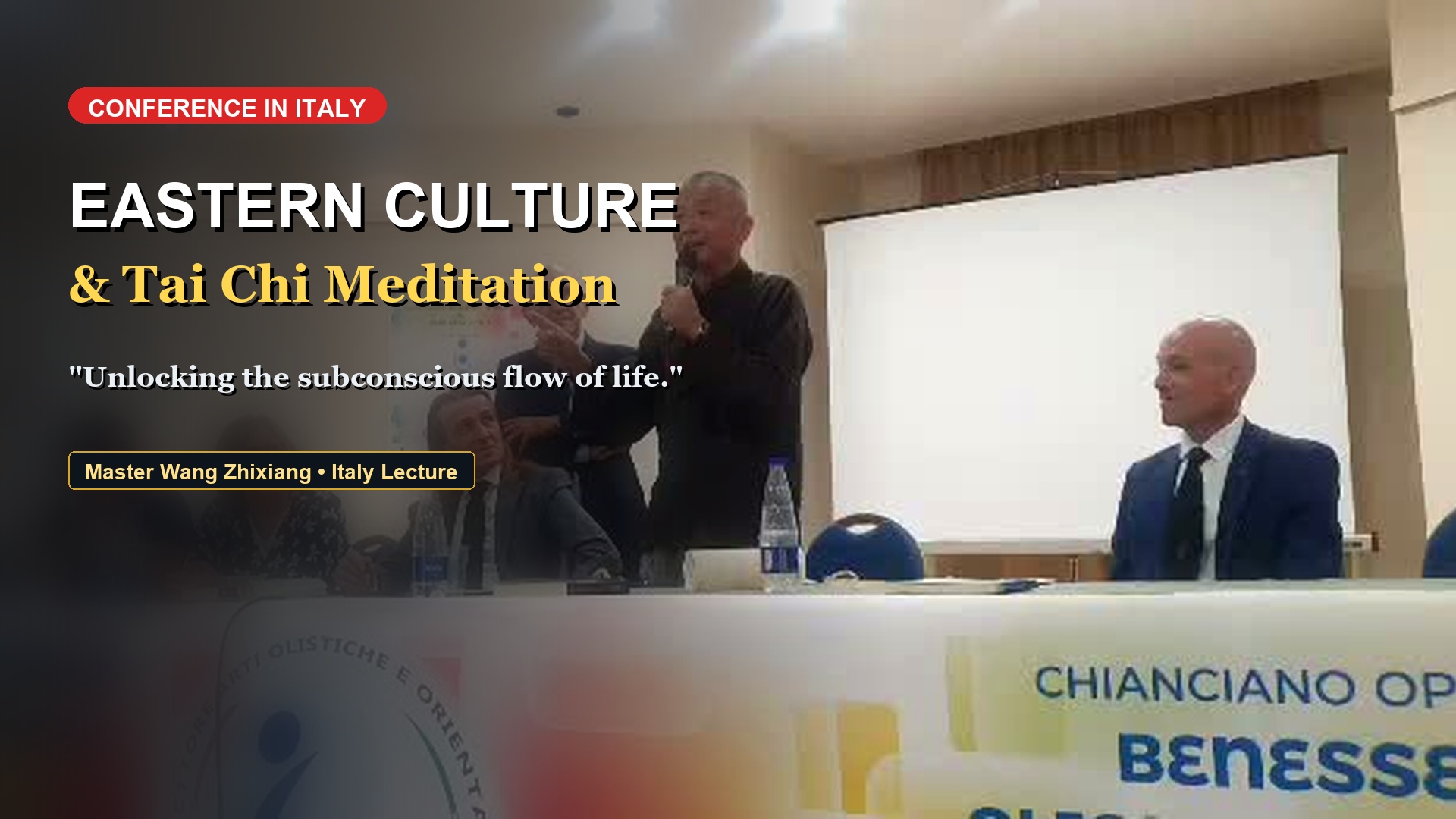
Chianciano Terme National Keynote
Keynote assembly lecture delivered to European martial arts instructors on multidimensional Yin-Yang mechanics and meridian conductivity.
Watch Keynote & Read Transcript →
To connect with official regional seminars and in-person instruction across Europe and Asia, visit:
• Wang Academy Europe (Lugano, Switzerland & Italy): www.wangacademy.org
• Taiji Academy International: www.taijiacademy.org