Transcending Linear Resistance in Martial Encounters
When facing an incoming strike or aggressive shove, ordinary human instinct triggers muscular bracing—meeting force with counter-force. In the high-dimensional combat doctrine of Water Tai Chi, Master Wang Zhixiang explains that resisting force directly is fundamentally flawed. When two solid objects collide, the heavier and faster mass prevails.
By operating from a spherical state of awareness, the practitioner never offers a flat impact zone. The incoming force encounters a curved, frictionless surface that smoothly guides the attacker's trajectory into empty space.
The Art of Tangential Deflection and Effortless Balance
True martial neutralization operates through rotational torque around a stable, relaxed axis. As contact occurs, the practitioner does not push away; rather, they rotate the pelvic and thoracic planes slightly, allowing the contact point to glide harmlessly past the central equilibrium line.
The opponent suddenly experiences a disorienting sensation of stepping off a cliff. Deprived of solid ground to push against, their own forward momentum compromises their balance, enabling effortless redirection with minimal physical effort.
Frequently Asked Questions
Why does conventional muscular blocking fail in real encounters?
Direct blocks absorb impact into the defender's joints and muscles, which leads to injury or collapse against superior physical mass.
What does tangential deflection mean in martial Tai Chi?
It means redirecting an incoming straight punch or push along a curve, allowing the energy to bypass your center without collision.
How does the practitioner maintain balance during rapid rotation?
By keeping the lower Dantian rooted, relaxing the hip crease (Kua), and maintaining upward suspension through the crown of the head.
Can these high-dimensional concepts be applied by smaller practitioners?
Yes, because the technique relies on rotational mechanics and timing rather than muscular strength, smaller practitioners excel naturally.
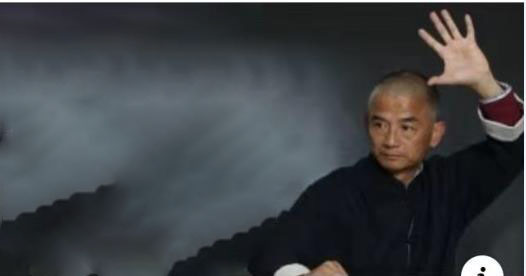
About Master Wang Zhixiang
Former Vice Chairman of the Shanghai Wushu Association, graduate of Shanghai University of Traditional Chinese Medicine. Studied under great Tai Chi grandmasters including Master Wang Zhuanghong, Master Dong Bin, and other prominent Tai Chi luminaries. Dedicated to sharing Water Tai Chi globally for over two decades.