The Four Primary Dimensions of Internal Force
In the classical Tai Chi manual, the Four Primary Energies (Si Zheng Jin)—Ward-Off (Peng), Rollback (Lu), Press (Ji), and Push (An)—form the core vocabulary of push hands and martial interaction. Yet Master Wang Zhixiang frequently quotes an old master's lament: 'Out of ten practitioners, ten do not understand Peng, Lu, Ji, and An.'
The misunderstanding arises when practitioners treat these energies as fixed arm choreographies. In Water Tai Chi, they are dynamic states of whole-body spatial resonance rooted in fluid internal mechanics.
From Buoyant Expansion to Seamless Neutralization
Peng is the mother of all internal energies: an expansive, buoyant quality like a basketball floating on water that never collapses under pressure. Lu uses this buoyancy to guide an incoming force past the center without gripping or breaking contact.
Ji converges two opposing vectors into a focused penetrating line, while An roots downward into the earth to release smooth, wave-like momentum. Together, they form a perpetual cycle where force is received, transformed, and released effortlessly.
Frequently Asked Questions
What is the most common error when practicing Peng Jin?
Confusing Peng with muscular pushing or arm stiffness. True Peng is rounded, light, and elastic like an inflated balloon floating on waves.
How does Lu Jin avoid passive collapsing?
Lu maintains continuous contact and light forward intention; it leads the opponent's force around a circle rather than pulling straight back.
What biomechanical action defines Ji Jin (Press)?
Ji involves closing the space between two limbs or planes, focusing whole-body momentum into a single concentrated point of contact.
Why does An Jin require downward rooting before moving forward?
If you push outward without sinking body weight into the earth first, the reaction force will push you backward off your own balance.
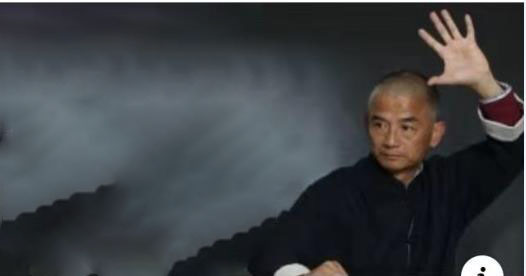
About Master Wang Zhixiang
Former Vice Chairman of the Shanghai Wushu Association, graduate of Shanghai University of Traditional Chinese Medicine. Studied under great Tai Chi grandmasters including Master Wang Zhuanghong, Master Dong Bin, and other prominent Tai Chi luminaries. Dedicated to sharing Water Tai Chi globally for over two decades.