Push Hands (Tuishou) is the living conversation of Tai Chi Chuan. Solo forms cultivate self-awareness (knowing oneself), but without two-person listening force, one cannot know the other. Through the classical 20-Word Formula, practitioners learn to yield without collapse and neutralize incoming force without aggressive resistance.
The Living Dialogue: Why Practicing Forms Alone Leaves You Half-Trained
Master Wang Zhixiang frequently uses a striking linguistic metaphor to explain the essential role of Push Hands (Tuishou):
"Imagine a student who scores 100% on English grammar tests and recites vocabulary flawlessly. But when a native speaker starts a conversation, the student understands nothing and cannot speak a single sentence. In martial terms, solo form practice is merely preparing for the test. Push Hands is the actual live conversation."
Practicing solo forms teaches you to know yourself (Zhi Ji)—aligning the spine, opening the pelvic crease, and moving with fluid grace. However, when an external pressure arrives, self-delusion collapses if you have not cultivated knowing the other (Zhi Bi). Tuishou is the laboratory where internal mechanics are honestly verified.
The 20-Word Formula: The Five Progressive Tiers of Internal Mastery
In this masterclass, Master Wang Zhixiang systematically deconstructs the traditional 20-Word Formula (Ershi Zi Jue) across five progressive architectural tiers:
- Tier 1 – The Four Mother Energies (Si Zheng Jin): Peng (Ward-off buoyancy), Lu (Rollback yielding), Ji (Press convergence), and An (Push sinking). These four energies form the perpetual circular cycle of internal boxing.
- Tier 2 – The Four Diagonal & Bodily Strikes (Si Yu Jin): Cai (Downward pluck), Lie (Centrifugal split), Zhou (Elbow penetration), and Kao (Body bump, including hip/buttock strikes). These engage when the central axis is challenged.
- Tier 3 – The Four Adhesive Laws (Zhan Nian Lian Sui): Zhan (Stick), Nian (Adhere), Lian (Continuous link), and Sui (Follow without resisting). Never disconnect, and never meet force with hard resistance.
- Tier 4 – The Four Phases of Neutralization & Release: Qing (Upward suspension), Yin (Leading into emptiness), Song (Spontaneous release of weight), and Fang (Uncoiling projection).
- Tier 5 – Supreme Spiritual Envelopment: Fu (Spreading conscious intention over the opponent), Gai (Canopy coverage from above), Tun (Inhaling and swallowing the incoming force), and Tu (Effortless external emission).
Natural Hand Exchanges and Listening Force (Ting Jin)
As demonstrated in the instructional video, the heart of two-person drills is fluid hand exchange. Rather than locking wrists into an arm-wrestling contest, both practitioners maintain sensitive micro-contact. Through the nerve endings of the forearms, you listen (Ting Jin) to the slightest intent of the opponent:
When the opponent pushes forward, your waist dissolves backwards and slightly downward like water absorbing a stone. The moment their momentum reaches its peak and empties, your natural spring rebound (Peng Jin) restores balance effortlessly.
Step-by-Step Partner Training Protocol for Beginners
To practice Push Hands safely and avoid injury or unproductive wrestling, adhere to this progressive sequence:
- Step 1 – Fixed-Step Single Push Hands: Stand in a relaxed bow stance. Maintain contact at the wrist. Practice solely horizontal circles, alternating between rolling back and gently pressing forward.
- Step 2 – Establishing the Elastic Sphere: Maintain curved arms like holding a beach ball. Never allow the opponent to press your hands flat against your chest. If compressed, rotate the waist (Kua) rather than resisting with shoulder muscles.
- Step 3 – Introducing Double Push Hands: Combine Peng, Lu, Ji, An continuously. Focus entirely on feeling where the partner's balance center lies.
Three Fatal Pitfalls to Eliminate in Tuishou
Master Wang highlights three primary errors that prevent students from developing true internal sensitivity:
- 1. The Sumo Wrestling Reflex (Ding): Meeting strength with strength. The moment you push back rigidly, your feet lose root and your opponent can redirect you with minimal effort.
- 2. The Disconnect Escape (Diu): Pulling your arms away entirely when feeling threatened. Breaking contact blinds your tactile listening system.
- 3. Moving the Arms Without the Waist: Using isolated shoulder power instead of generating rotation from the hips and feet. True power originates in the feet, is guided by the waist, and manifests through the fingers.
From Martial Sensitivity to Everyday Composure
Push Hands is not designed to foster aggression; it is an unmatched training ground for psychological composure. By learning to stay relaxed when an external force approaches your body, you develop an unshakeable calmness when navigating everyday personal conflicts and high-pressure challenges.
Structured Curriculum & Next Lessons
Frequently Asked Questions
What is the main objective of Tai Chi Push Hands (Tuishou)?
Tuishou bridges the gap between solo forms and interactive sensitivity. It trains practitioners to listen to external pressure, yield effortlessly, and neutralize force without muscular collision.
What does the 20-word formula encompass?
It outlines the five essential tiers of martial sensitivity: the four mother energies (Peng, Lu, Ji, An), four corner energies, four adhesive laws, four phases of release, and spatial envelopment.
Can beginners start Tuishou without knowing the full routine?
Yes. Beginners can immediately start with single-hand fixed-step drills to cultivate relaxed contact and listening sensitivity without needing complex choreography.
Why is arm wrestling harmful to authentic Tai Chi development?
Muscular resistance locks the joints and breaks fluid communication with the ground, destroying the relaxed sensitivity (Song) essential for internal neigong.
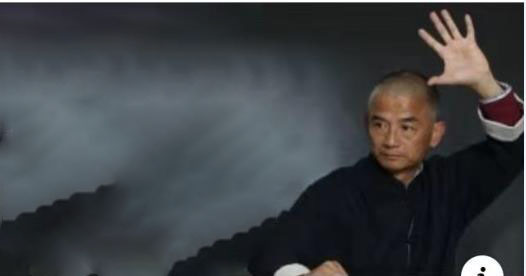
About Master Wang Zhixiang
Former Vice Chairman of the Shanghai Wushu Association, graduate of Shanghai University of Traditional Chinese Medicine. Studied under great Tai Chi grandmasters including Master Wang Zhuanghong, Master Dong Bin, and other prominent Tai Chi luminaries. Dedicated to sharing Water Tai Chi globally for over two decades.